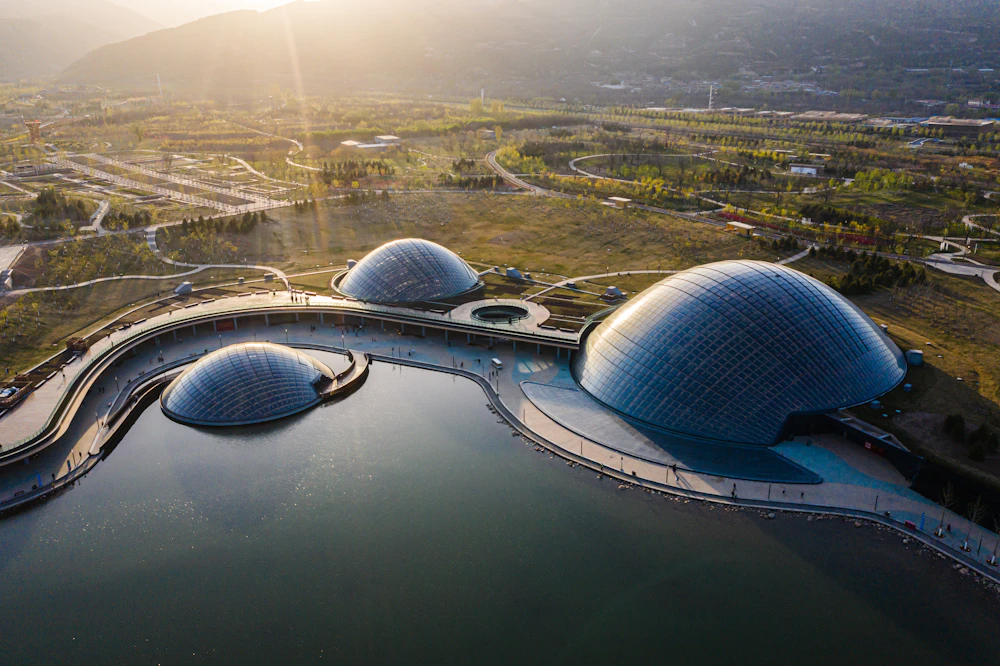
Taiyuan Botanical Garden Domes
Each of the 2,400 glulam members is unique. Computational generation, parametric steel nodes, CNC-mapped screw locations and algorithmic container packing carried the gridshells from engineering through assembly.
Computational design
We use computation to explore structural ideas, understand how they perform and carry reliable geometry into fabrication and erection. Its value comes from a faster, clearer feedback loop between architectural intent, structural behaviour, material, connections and the sequence of building.
Parametric models expose the relationships that shape a structure: span, depth, curvature, member spacing, support conditions and material limits. As those inputs change, our engineers and computational designers compare structural response and test alternatives while the design is still flexible. Form-finding and optimization help reveal a clear load path.
This process applies across timber, steel, concrete and hybrid systems. It supports early structural concepts, detailed analysis and the decisions that connect one material to another.
We rationalize curved and freeform structures into members, nodes and repeatable rules, then carry the model into drawings, CNC information, procurement and erection planning. Fabrication constraints, shipping dimensions, tolerances and access on site become design inputs early enough to shape the solution.
Experience in detailing and construction returns information from the shop and site to the model. Physical fit-up, measured spring-back and installation sequence can inform the engineering before those decisions become costly.
Digital analysis is one part of the evidence. Depending on the problem, our teams also use scale models and prototypes to study geometry, connections and material behaviour. The process follows a structural idea through analysis, fabrication decisions and installation.
Each of the 2,400 glulam members is unique. Computational generation, parametric steel nodes, CNC-mapped screw locations and algorithmic container packing carried the gridshells from engineering through assembly.
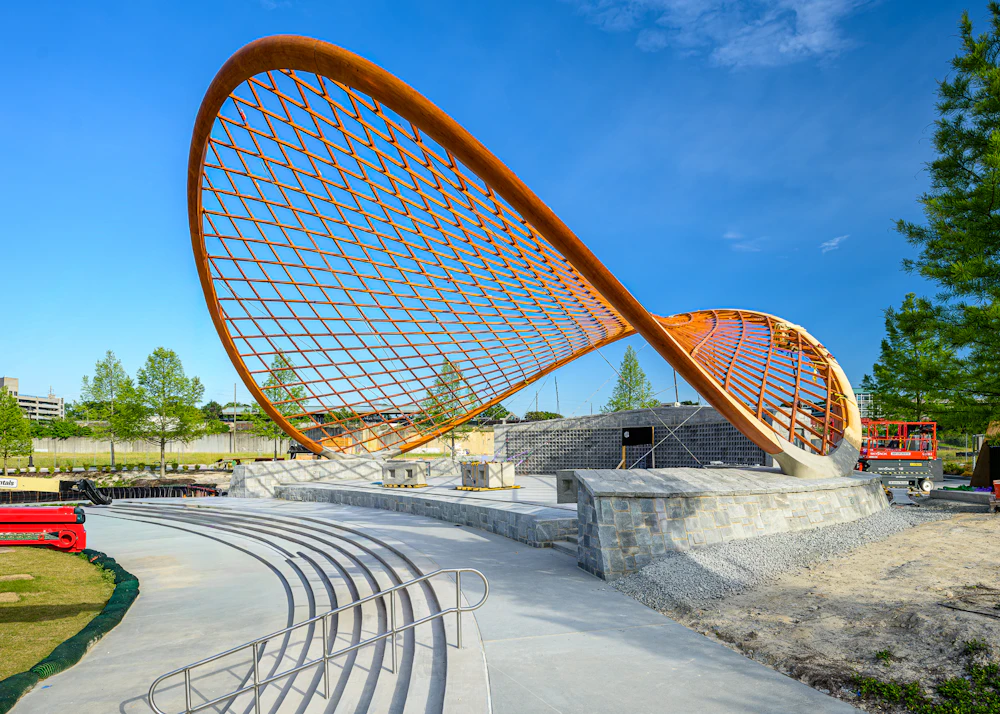
Computational form-finding and physical models at 1:80, 1:50 and 1:10 scales informed the Chebyshev gridshell and its doubly curved glulam ring beam.
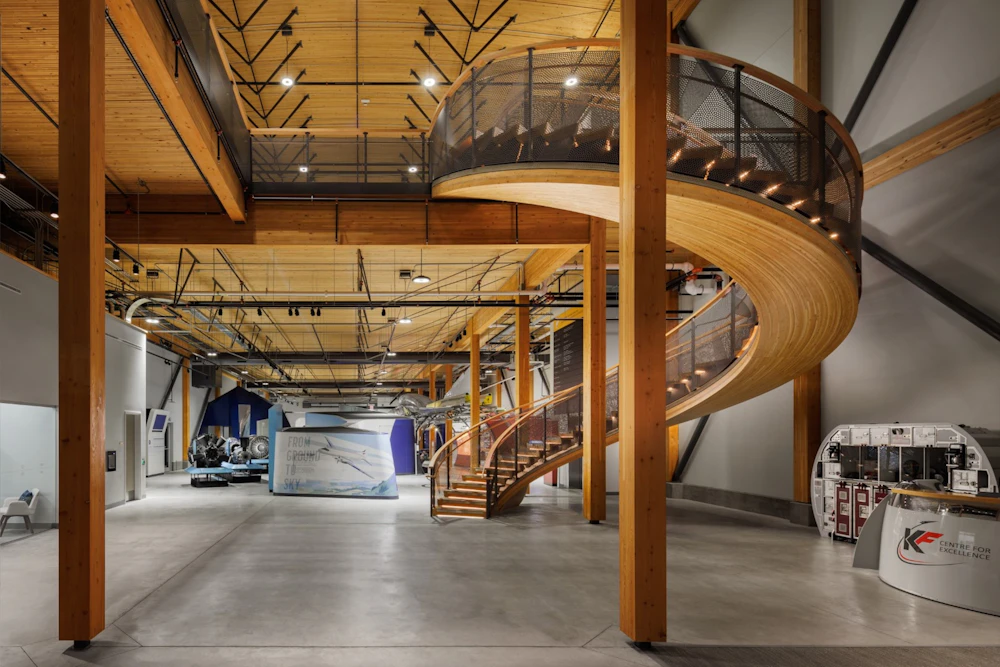
A doubly curved CLT and concrete composite section spans 70 feet without support columns. Prototypes and bending tests informed curvature, twist and predicted spring-back.
Our article on computational design with timber explains how parametric relationships and real-time analysis shorten the feedback between geometric change and structural response.
We can help test structural systems, rationalize complex geometry or develop a model-based path from concept to fabrication and erection.